
For most manufacturing companies, production planning is where chaos begins. Orders arrive. Materials are missing. Machines are overloaded. Delivery dates slip. And somewhere in the middle, a spreadsheet that nobody fully trusts.
Odoo MRP (Manufacturing Resource Planning) is designed to fix exactly this. Not by adding another tool to your stack but by connecting the information that already exists in your business into one coherent, real-time planning system.
In this article, we explain how Odoo MRP works, what it covers, and how industrial companies use it to move from reactive fire-fighting to structured, reliable production planning.

- What is Odoo MRP?
- The key components of Odoo MRP
- How Odoo MRP connects to the rest of your operations
- Production planning in practice: what changes with Odoo MRP
- Advanced Odoo MRP capabilities
- Common mistakes in Odoo MRP implementation
- Is Odoo MRP right for your manufacturing company?
- How Eezee implements Odoo MRP for industrial companies
- Conclusion: from reactive to structured manufacturing planning
What is Odoo MRP?
MRP stands for Manufacturing Resource Planning. It is the core module within Odoo's manufacturing suite, responsible for orchestrating everything that needs to happen to transform raw materials into finished products on time, at the right cost, with the right quality.
At its most basic, Odoo MRP answers three fundamental questions:
- What needs to be produced? (based on sales orders, forecasts or reorder rules)
- When does it need to be produced? (based on delivery dates, lead times and capacity)
- With what will it be produced? (based on Bills of Materials, stock levels and supplier lead times)
The power of Odoo MRP is not in answering these questions in isolation, it is in answering them simultaneously, in real time, across your entire production operation.
The key components of Odoo MRP
Bills of materials (BOM)
The Bill of Materials is the foundation of every production order. It defines exactly which components, in which quantities, are needed to manufacture a product.
Odoo supports:
- Single-level BOMs for simple assemblies
- Multi-level BOMs for complex products with sub-assemblies
- Phantom BOMs for components that are never stocked but always consumed directly in production
- Variant-specific BOMs for products with configurable options
Getting your BOMs right is the single most important step in any MRP implementation. Unreliable BOMs produce unreliable production orders and unreliable production orders produce cost overruns, material shortages and missed deliveries.
See how Xeryon manages over 100,000 product variants with dynamic BOMs in Odoo : Read the Xeryon case study
Work centers and routings
A Work Center is any resource that performs a manufacturing operation a machine, a workstation, a team, an external subcontractor. In Odoo, each work center has a defined capacity, efficiency rate and cost.
A Routing is the sequence of operations required to manufacture a product, assigned to specific work centers with estimated durations. When a manufacturing order is created, Odoo uses the routing to schedule each operation across available work centers, taking capacity constraints into account.
This is what makes Odoo MRP a genuine planning tool, not just a tracking system.
Manufacturing orders
A Manufacturing Order (MO) is the central document in Odoo MRP. It brings together:
- The product to be manufactured and the quantity required
- The BOM to be used
- The routing and work center assignments
- The scheduled start and end dates
- The components to be consumed
- The actual quantities produced and costs incurred
Manufacturing orders can be created manually, generated automatically from sales orders, or triggered by reorder rules when stock falls below a minimum threshold.
The MRP scheduler
The MRP Scheduler is the engine that runs behind all of this. When triggered, it analyses:
- Current stock levels
- Pending sales orders and forecasted demand
- Existing manufacturing orders and their status
- Supplier lead times and open purchase orders
- Reorder rules and safety stock levels
Based on this analysis, it generates replenishment proposals either manufacturing orders or purchase orders with suggested quantities and dates. Your planning team reviews, adjusts and confirms these proposals before execution begins.
How Odoo MRP connects to the rest of your operations
One of the most important aspects of Odoo MRP is that it does not exist in isolation. It is natively integrated with every other module in the Odoo ecosystem.
MRP and inventory
Every manufacturing order automatically reserves the required components from stock. When production begins, component consumption is recorded in real time. When production is completed, the finished product is automatically added to inventory.
No manual stock adjustments. No reconciliation between production and warehouse systems.
MRP and purchasing
When the MRP scheduler identifies a material shortage, it generates a purchase order proposal for the missing components with the correct supplier, quantity, and required delivery date already populated based on your supplier lead times and reorder rules.
Your purchasing team reviews and confirms. The purchase order is sent. When materials arrive, they are received directly into the production reservation.
MRP and sales
Sales orders are the primary demand signal in most manufacturing operations. When a confirmed sales order requires a product that is not in stock, Odoo can automatically trigger a manufacturing order linking the production directly to the customer delivery.
This creates end-to-end traceability from the customer order to the finished product, and allows production planners to prioritize based on real delivery commitments rather than generic forecasts.
MRP and finance
Every manufacturing order accumulates actual costs as it progresses materials consumed, labour time recorded, machine time used. These costs are automatically posted to analytical accounts, giving your controlling team real-time visibility on production costs without waiting for month-end closing.
"
I can have a live view on the profitability of each and every project
Axel Soyer, CEO of Desimone
.
Production planning in practice: what changes with Odoo MRP
Before Odoo MRP: the typical situation
Most manufacturing companies that come to Eezee without a proper MRP system share a similar story:
- Production planning happens in Excel or in someone's head
- Material shortages are discovered when production is about to start
- Delivery dates are based on optimistic estimates rather than real capacity data
- Purchasing is reactive orders placed when the warehouse calls, not when the data says
- Profitability is calculated at month-end, not per order
The result is a constant state of firefighting. Teams spend more time managing exceptions than executing plans.

Case example
After Odoo MRP: what structured planning looks like
With Odoo MRP properly implemented:
- Demand signals from sales flow automatically into production planning
- Material availability is checked before production orders are confirmed
- Capacity constraints are visible before commitments are made to customers
- Purchase orders are triggered automatically with the right lead times
- Every production order has a real cost visible in real time
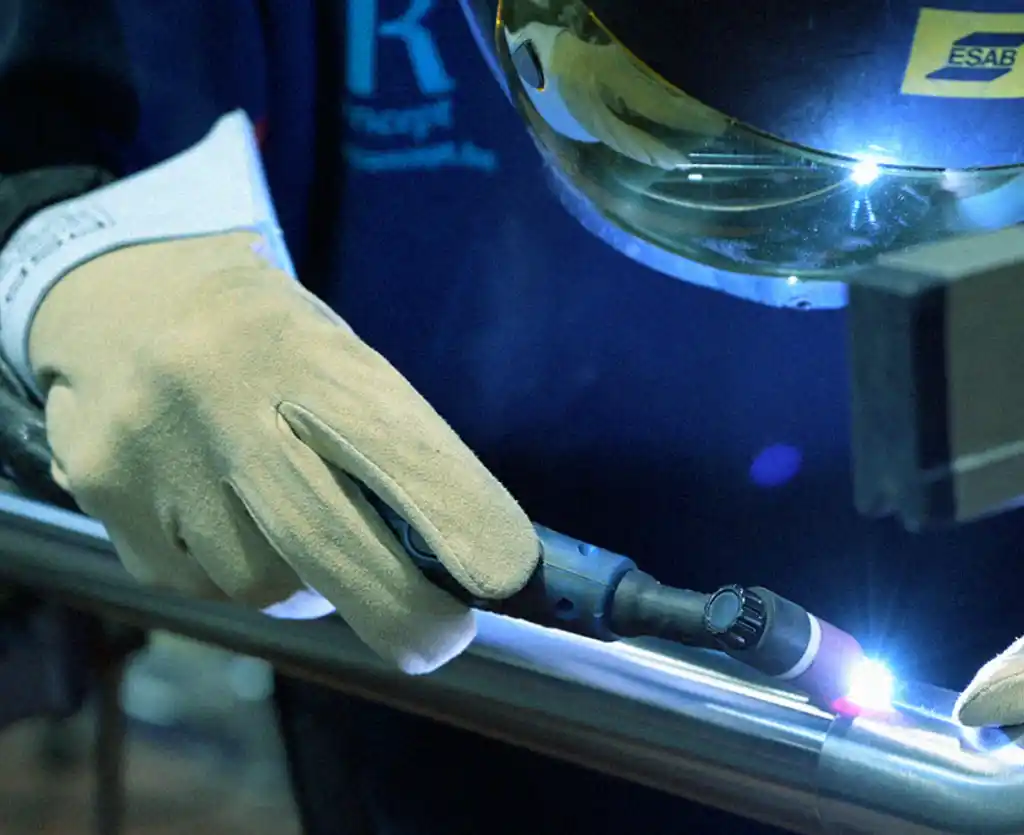
This is not a theoretical improvement. It is the operational reality of companies like Desimone, Xeryon and R-Concept after their Odoo implementations with Eezee.
Advanced Odoo MRP capabilities
Replenishment strategies
Odoo supports multiple replenishment strategies that can be combined depending on your product mix:
- Make to Order (MTO): production triggered by a specific sales order no stock built in advance
- Make to Stock (MTS): production triggered by reorder rules when stock falls below a minimum level
- Mixed strategies: different rules for different product categories, depending on demand predictability and lead times
Capacity planning and work center scheduling
Odoo's production scheduler visualizes work center load across time, allowing planners to identify bottlenecks before they become problems. When a work center is overloaded, orders can be rescheduled or reassigned to alternative resources.
Subcontracting management
When part of your production is handled by external suppliers, Odoo's subcontracting module integrates seamlessly with MRP. Components are sent to the subcontractor, finished goods are received back, and costs are tracked all within the same manufacturing workflow.
Forecasting and demand planning
Beyond confirmed orders, Odoo allows you to build sales forecasts that feed directly into MRP enabling production planning for products with long lead times or seasonal demand patterns. Combined with AI-powered forecasting capabilities, this transforms MRP from a reactive tool into a forward-looking planning engine.
Common mistakes in Odoo MRP implementation
After 250+ ERP projects, Eezee has seen the same mistakes appear repeatedly in manufacturing implementations. Here are the most common and how to avoid them.
Incorrect or incomplete BOMs
If your BOMs don't reflect what actually happens in production, your MRP will generate unreliable proposals. Before going live, every BOM must be validated against real production experience not just theoretical specifications.
Missing or inaccurate lead times
MRP scheduling is only as good as the lead time data it works with. If supplier lead times are wrong, purchase order proposals will be too late. If manufacturing lead times are wrong, delivery date promises will be broken. Investing time in accurate lead time data before go-live pays for itself immediately.
Treating MRP as a set-and-forget system
MRP is a planning tool, not an autopilot. It requires regular review of proposals, adjustment of parameters as demand patterns change, and ongoing maintenance of master data. Companies that treat MRP as a one-time configuration quickly find that the quality of its outputs degrades over time.
Going live with too much scope at once
The most successful manufacturing implementations Eezee delivers are phased. Core MRP flows first BOMs, work centers, manufacturing orders, basic procurement. Then quality, advanced scheduling, analytics and integrations. Trying to activate everything simultaneously increases risk and reduces adoption.
Is Odoo MRP right for your manufacturing company?
Odoo MRP is well suited for :
- Job shop and custom manufacturers managing project-based production with complex BOMs
- Repetitive manufacturers producing standard products in volume with defined routings
- Mixed-mode manufacturers combining make-to-order and make-to-stock strategies
- Growing industrial SMEs replacing Excel and disconnected systems with a structured planning foundation
- Multi-site manufacturers needing consolidated visibility across multiple production locations
It is less suited in its standard configuration for highly automated process manufacturing with real-time machine integration requirements, which may require additional MES connectivity.
How Eezee implements Odoo MRP for industrial companies
Our approach to MRP implementation is always business-first. Before configuring a single parameter in Odoo, we invest time in understanding:
- How your production actually works today
- Where the gaps are between planning and execution
- What data is reliable and what needs to be rebuilt
- Which demand signals drive your production (orders, forecasts, reorder rules)
- How production performance is measured and by whom
We then design an MRP architecture that reflects your reality not a generic template and implement it in phases that deliver measurable value from the first go-live.

Conclusion: from reactive to structured manufacturing planning
Odoo MRP is not magic. It does not fix broken processes, bad data or misaligned teams on its own. But when properly implemented with the right BOM structure, accurate lead times, and a planning team that understands how to use it, it fundamentally changes how a manufacturing company operates.
Less firefighting. More anticipation. Real costs visible in real time. Delivery commitments based on data, not optimism.
That is what structured manufacturing planning looks like. And it starts with Odoo MRP.
Book a call

Odoo MRP: how to plan your production efficiently